
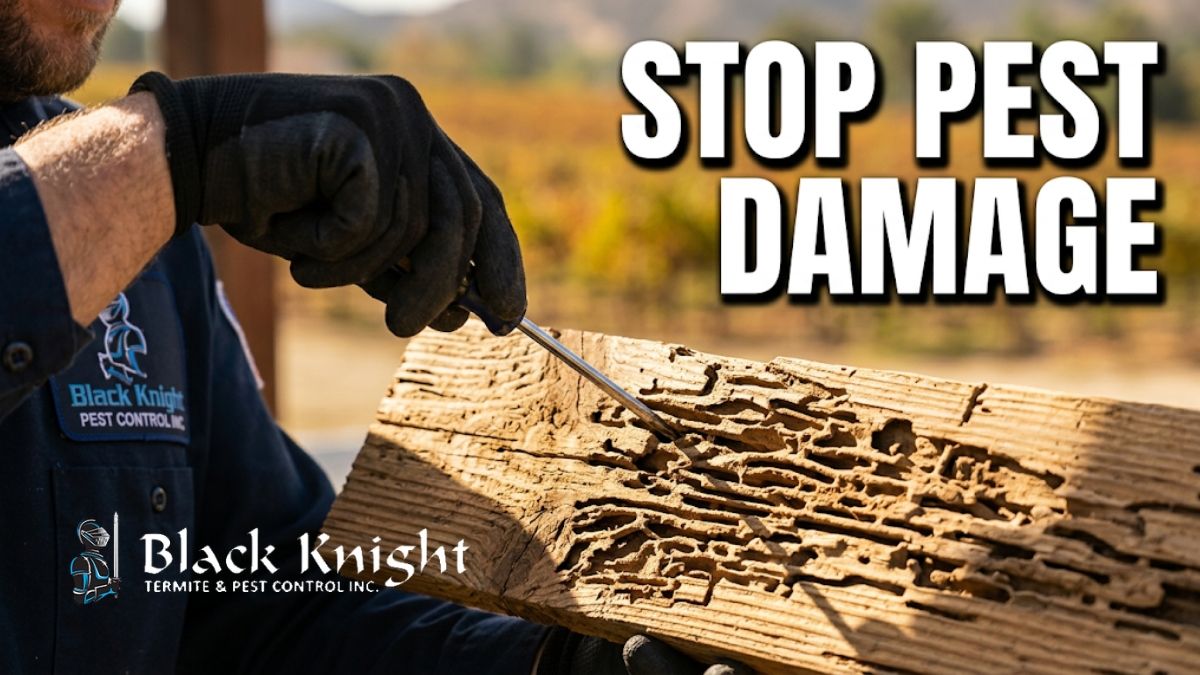
For many families in the Temecula Valley, our homes are more than just buildings; they are the backdrop for our lives and our most significant investments. However, the warm Southern California climate we enjoy also provides a perfect environment for a "silent destroyer" that threatens the foundation of our sanctuary. Understanding the signs of termites is the first step in acting as a protector for your property. At Black Knight Termite & Pest Control, we’ve spent over two decades serving as the expert guide for local homeowners, helping you identify a termite infestation before it results in devastating termite damage.
Quick Answers: How to Identify Signs of Termites
Detecting termites early can save you thousands in repairs. Look for these four key indicators:
Mud Tubes: Pencil-sized dirt tunnels on your home’s exterior foundation.
Discarded Termite Wings: Translucent wings are often found near a door frame or windowsill.
Termite Droppings (Frass): Small mounds of pellets that look like coffee grounds.
Hollow-sounding wood: Timber that sounds empty when tapped with a screwdriver handle.
The Most Common Warning Signs of Termites in Your Home
The difficulty with termites is that they are rarely seen out in the open. Instead, they leave behind specific biological evidence. A primary clue is the presence of discarded termite wings. These usually appear after a termite swarm, which occurs when reproductive termites shed their wings to begin a new colony nearby.
Another unmistakable sign is frass, or termite droppings. Because termites eat wood, their waste is wood-based; you might notice these small, uniform pellets accumulating on window sills or floors. If you see what looks like a tiny pile of sawdust but find no obvious reason for it, it’s time for professional termite intervention. For visual identification of these signs, the UC IPM guidelines offer excellent resources for California residents.
Understanding Subterranean Termites and the Drywood Termite
Southern California homes are primarily affected by two main types of these pests: subterranean and drywood termites.
Subterranean termites live in the soil and need moisture to survive. They build mud tubes, which are protective tunnels made of soil and debris. These tunnels let them travel from the ground to their food source, which is the wood in your home.
The drywood termite, on the other hand, lives entirely inside the wooden structures it consumes. Unlike their subterranean cousins, they do not need contact with the soil.
You may also occasionally hear about Formosan termites, an invasive and aggressive subterranean species that can cause damage much faster than native types.
The Hidden Risks to Your Home’s Structural Integrity
When termites eat wood, they are actually seeking cellulose, which is found in wood, paper, and drywall. As they tunnel, they hollow out the wood from the inside out, often leaving only a thin layer of paint or veneer. This compromises the structural integrity of your home.
Warning signs of severe damage include stuck windows and doors. When termites consume the wood in a door frame or window casing, the wood can warp or buckle, making it difficult to operate the door or window. If your floors feel "spongy" or you notice hollow-sounding wood when tapping on baseboards, the "Villain" of this story has likely been active for some time. To understand the specific mechanics of this decay, view our guide on damage caused by termites.
Professional Termite Inspections
Early detection is essential because termites eat wood 24 hours a day, 365 days a year. We recommend annual termite inspections to catch these silent destroyers before the damage becomes extensive.
Your Plan for Success
As your local Guide, Black Knight Termite & Pest Control follows a clear process:
Thorough Assessment: We examine your attic, crawlspaces, and foundation.
Identification: We determine the specific species and the extent of the termite infestation.
Customized Strategy: We develop targeted treatment plans that prioritize your family’s safety.
If you are currently buying or selling a home, we also offer specialized termite inspections for real estate.
Effective Termite Control and Prevention
Finding termites doesn't need to feel like a nightmare. Modern termite control has evolved to include highly effective, localized options. While some cases may require traditional fumigation, we often utilize advanced baits and soil barriers that are effective and environmentally conscious.
You can also take preventative steps at home:
Reduce Moisture: Fix leaks and ensure proper ventilation in crawlspaces, as termites thrive in damp environments.
Clear Debris: Keep firewood piles at least 20 feet away from your foundation.
Seal Entry Points: Fill cracks in your foundation with grout or caulk to limit access.
Frequently Asked Questions About Termites
Question: What is the average termite treatment cost in CA?
Answer: In California, localized spot treatments can start around $500, while comprehensive treatment plans for larger homes or severe infestations can exceed $2,500.
Question: Can I handle a termite infestation myself?
Answer: DIY methods often fail to reach the heart of the colony, leaving the queen alive to continue reproducing. Professional termite care is the only way to ensure the entire colony is eliminated.
Question: How do I know if the mud tubes are active?
Answer: You can carefully break a small section of the tube. If the termites repair it within a few days, you have an active infestation.
Don't wait for the damage to become visible. Secure your home’s future with the "Friendly Local Protector."
Call Black Knight Termite & Pest Control at 951-694-8100 or Book Your Inspection Online.